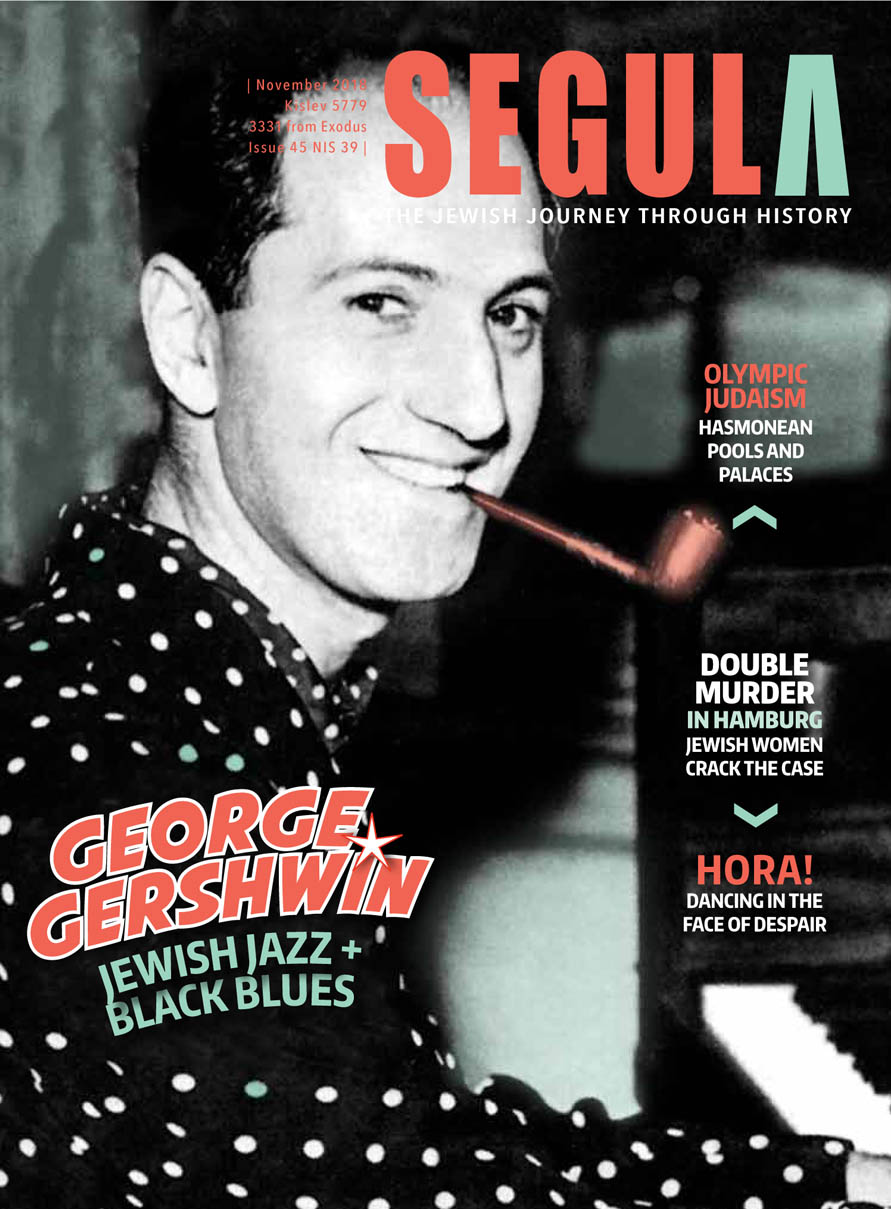
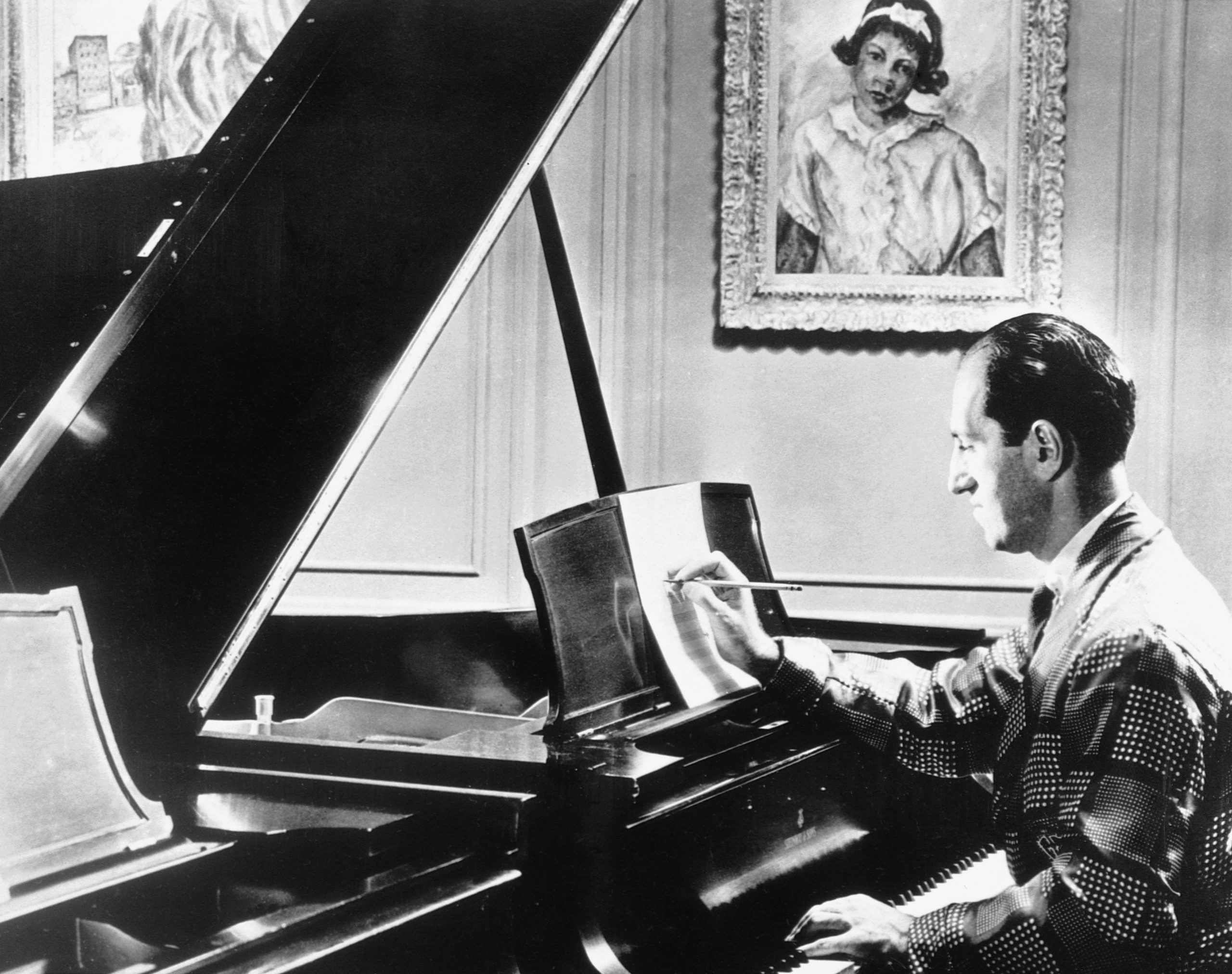
The cultural meld of Jews and blacks working together in show business gave rise to a new style of American music. Captivated by black sounds and rhythms, composer George Gershwin interwove classical motifs and popular melodies into a black and white razzmatazz of jazz

Though American music has long been defined in terms of black or white, depending on itscommunity of origin, there are also shades of gray. Nineteenth-century Irish composers gave American popular music lilt, and Italian singers have also made their mark. It took a while for these ethnic influences to penetrate America’s WASP elite, but from the 1880s onward, Jews were vastly overrepresented in the emerging music industry.
Today we take the vocal virtuosity of black divas, the wail of the blues,and the ecstasy of gospel for granted, but the music must have grated on the conservative ears of white America after the Civil War. Overall, American music is largely the product of black-Jewish collaboration, a cultural blend manifest in the struggle for civil rights as well.
As Europe’s Jews fled the slaughter engulfing them, Jewish Americans were creating a new musical genre. If German composer Richard Wagner had attributed the mediocrity of 19th-century music to its many Jewish contributors, then the Jews’ reinvention of American music was their revenge. They wrote the popular ragtime melodies, the hit Broadway musicals, the movie soundtracks, the groundbreaking jazz operas, and the folk and blues of the civil rights movement. Their music projected the America they dreamed of: liberal, multicultural, cosmopolitan; a land of opportunity for all, regardless of race, creed, or gender. To quote Ira Gershwin, they “built a stairway to paradise.”
Black Like Me
“Uptown Funk” (2014) has been one of this decade’s biggest hits. Recorded by Jewish producer Mark Ronson and vocalist Bruno Mars, who also has Jewish roots, the single is full of black slang. Though it sounds like updated 1970s funk, the song typifies an aspiration shared by white pop music composers and performing artists over the last century – to be, as author Norman Mailer titled his famous essay on American society, “White Negros.” The timbre of black vocals, the Afro-American beat, and the aura of “black cool” represent the ideal.
Pop music reflects a kind of inverted racism: “black” is considered the real deal, while “white” is just a wannabe. Jewish musicians played an important part in promoting this perspective; as composers and performers, they built the American music industry on the foundations of black musical culture.
Jews ventured into show business first and foremost as entrepreneurs. All six of Hollywood’s major movie studios were famously founded by first- or second- generation Jewish immigrants. But Jews were just as involved in the music industry. Music was neither particularly profitable nor respectable in the 19th century, attracting little investment and interest. But as vaudeville gained popularity in New York during the 1880s, and copyright became law in the 1890s, conditions were ripe for songwriters to rake it in. Suddenly, with one hit, lyricists and composers could be set for life – and make a profit for their music label too.
Not yet a Segula subscriber?
Access our full archive online, have print issues delivered to your door, and moreFeel free to share